


Rabbit Fur Dice
Price range: $45.00 through $223.00
In the old stories, rabbits were more than prey. They were omens, tricksters, teachers, and quiet guardians of the unseen. Their pelts holding the memory of moonlit fields, where soft-footed shapes slipped between worlds with uncanny ease. These dice carry that same whisper of wild magic: the softest of fur preserved in crystal clarity, as if frozen in the moment between a heartbeat and a leap. To roll these dice is to call upon the cunning of that memory of a trickster.
-
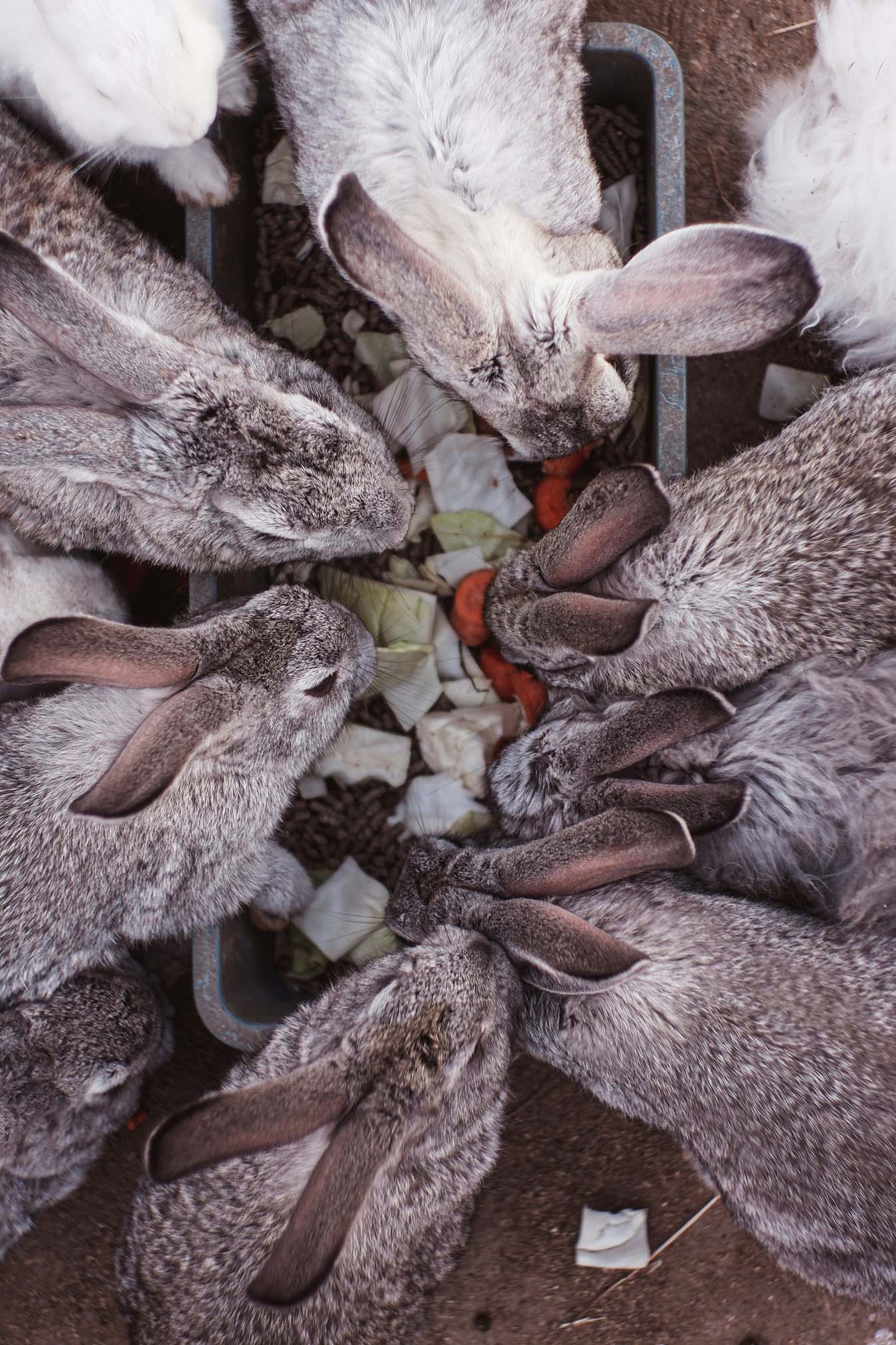

The European rabbit’s journey into domestication began on the sun soaked slopes of the Iberian Peninsula, where wild populations thrived in what is now Spain and Portugal. The Romans were the first to recognize their value, transporting rabbits across their empire as a portable source of meat and fur. But it was the medieval period that truly reshaped the rabbit’s destiny. By the 12th century, the Normans had introduced rabbits to Britain, establishing enclosed warrens to protect the animals from predators and harsh weather. These warrens — often marked by long, low “pillow mounds” still visible in England today were symbols of wealth and privilege. Rabbits were carefully managed by professional warreners, bred for desirable traits, and harvested as luxury goods. Over time, as rabbits adapted to new climates and escaped human control, they spread across Europe, transforming from elite livestock into furry menace. Becoming an invasive species in the process.

While medieval Europe was digging rabbit warrens and making aristocratic hunting grounds, the American continent was living an entirely different rabbit story. Long before European settlers arrived, North America was already home to a rich tapestry of native lagomorphs (what fancy folks call rabbits) cottontails darting through underbrush, jackrabbits sprinting across open plains, and snowshoe hares shifting their coats with the seasons. These species were not imported novelties; they were perfectly adapted to their environments.
For Indigenous peoples, rabbits were more than prey. They were cultural figures, woven into stories, ceremonies, and teachings. In many traditions, the rabbit appears as a trickster, clever and mischievous, a creature whose wit often outmatched larger, more powerful beings. In others, the rabbit is a teacher, a bringer of fire, or a symbol of agility and survival. Rabbits were hunted with respect, used for meat, fur, and ritual objects but never enclosed, bred, or managed in the European sense.
In short, America’s earliest rabbit history is ecological and cultural, not agricultural. There were no warrens, no specialized caretakers, no medieval infrastructure built to protect or propagate rabbits. The land already had rabbits, and it already had the predators and ecosystems to balance them.
 When European settlers arrived, they brought with them domestic rabbits the same species that had once been luxury livestock in Norman England. But the American landscape did not respond the way Britain had centuries earlier. Domestic rabbits remained mostly in hutches, small farms, and urban backyards. They did not escape into the wild in numbers large enough to reshape ecosystems. America already had foxes, coyotes, bobcats, wolves, and raptors — predators that kept any stray domestic rabbits from establishing feral populations.

In the United States, rabbits have reemerged as a practical and sustainable livestock choice, especially among homesteaders, small farms, and the local food movement. What was once a modest backyard animal during the Great Depression and WWII has become a symbol of efficient, ethical, small‑scale agriculture. American breeders continue to refine domestic lines for meat, fiber, and show, while 4‑H and FFA programs introduce younger generations to rabbit husbandry. In many ways, the U.S. is rediscovering the rabbit much as medieval Europeans once did not as a luxury, but as a resource that fits neatly into modern sustainability values.
Across the Atlantic, the British relationship with rabbits has taken the opposite trajectory. After centuries of ecological imbalance caused by their introduction, rabbits remain a persistent agricultural pest, shaping land management strategies to this day. Farmers still contend with crop losses, burrowing damage, and the lingering legacy of past population booms. Even now, Britain relies on fencing, culling, habitat control, and even introduced diseases to keep rabbit numbers in check a stark contrast to America’s renewed embrace of the rabbit as livestock. Where the U.S. cultivates, Britain struggles to contain.
Reviews
Dice Weight (1d20)
Material Density
Material Hardness

Country of Origin
Material Color
Lifetime Warranty
Enjoy the peace of mind of knowing your investment is covered under our lifetime warranty.
Made In Texas
Our dice are made in our state of the art facilities in Dallas, Texas by skilled craftsmen using the finest materials available.
Lifetime Warranty
We understand that you value your dice collection. We do too. That’s why all of our dice are covered under our lifetme warranty.
Experience Premium
Handcrafted for the discerning gamer. Our dice are crafted from premium materials with luxurious craftsmanship.


There are no reviews yet.